Western Red Cedar has been New Zealand’s default timber cladding for decades. It is now hard to get and expensive when you can. Japanese Cedar, or sugi, is the timber most specifiers reach for instead, so it is worth setting the two side by side on the things that matter for a wall: durability, movement, workability and supply.
Durability: the same class, tested in New Zealand
Durability is the question architects ask first, and it is the one with the clearest answer.
Scion, New Zealand’s forest research institute, ran ground-contact stake tests on imported Japanese Cedar heartwood at its Whakarewarewa test site. The stakes had an average life of more than eight years, which gives imported Japanese Cedar a natural durability classification of 2. Imported Western Red Cedar stakes tested at the same site returned a similar classification.
Two details from that testing are worth knowing. First, provenance matters: locally grown Japanese Cedar, like locally grown Western Red Cedar, rated a class lower at 3. Sugi cladding is imported heartwood from managed Japanese plantation forest, which is the material Scion tested at class 2. Second, Scion’s conclusion was that imported Japanese Cedar heartwood weatherboards should easily meet the 15-year minimum durability requirement of the New Zealand Building Code.
Sugi weatherboard is also covered by BEAL Appraisal C2549 for B1, B2, E2 and F2, with no chemical treatment required.
At a glance
| Japanese Cedar (Sugi) | Western Red Cedar | |
|---|---|---|
| Species | Cryptomeria japonica | Thuja plicata |
| Origin | Japan, managed plantation forest | Pacific Northwest, Canada and US |
| Density at 12% MC | 320–384 kg/m³ | 384 kg/m³ |
| Natural durability (Scion stake tests, imported heartwood) | Class 2 | Class 2 (similar classification, same test site) |
| NZBC B2 durability | Meets 15-year minimum; BEAL C2549 | Meets 15-year minimum |
| Chemical treatment | None required | None required |
| Janka hardness | ~1,420 N | ~1,560 N |
| Tangential shrinkage | ~5% | ~4% |
| Seasonal movement, 140 mm board, 12–18% MC | ~1.4 mm | ~1.1 mm |
| Moisture content at dispatch | 12–16% (kiln dried) | Varies by supplier |
| Workability | Machines cleanly, takes a sawn face well | Can be fibrous or brittle on end grain |
| Finishes | Oils, pre-coated Dryden system, yakisugi charred finish (made to order) | Oils |
| Supply | Plantation surplus; standard profiles in stock, custom profiles ~8 weeks | Constrained by quotas, wildfire seasons and tariffs |
Movement: a quarter of a millimetre
Western Red Cedar is a little more stable than Japanese Cedar on paper: about 4% tangential shrinkage against 5%. Those are green-to-oven-dry figures, and no cladding board ever travels that range. What matters is the seasonal swing on the wall.
Sugi cladding is kiln dried to 12–16% moisture content, which is already close to New Zealand’s exterior equilibrium. Across a typical 12–18% seasonal swing, a 140 mm Japanese Cedar board moves about 1.4 mm and a Western Red Cedar board about 1.1 mm. The difference is roughly 0.3 mm, well inside what a standard negative detail absorbs. On a 90 mm board the whole movement is under a millimetre.
The practical point for both species is the same: coat all four faces, use shiplap or bevelback profiles that restrain the edges, and fix once per board per stud rather than over-fixing. Detailed that way, the two timbers behave alike in service.
Hardness and workability
Western Red Cedar is marginally harder (around 1,560 N Janka against 1,420 N), and both are soft, light timbers for their strength. Japanese Cedar is the easier of the two to work. It machines cleanly, takes a sawn face exceptionally well and does not tend to split or go fibrous on end grain the way cedar can. That makes a real difference to custom profiling, which Sugi does at its Tauranga mill.
Finish
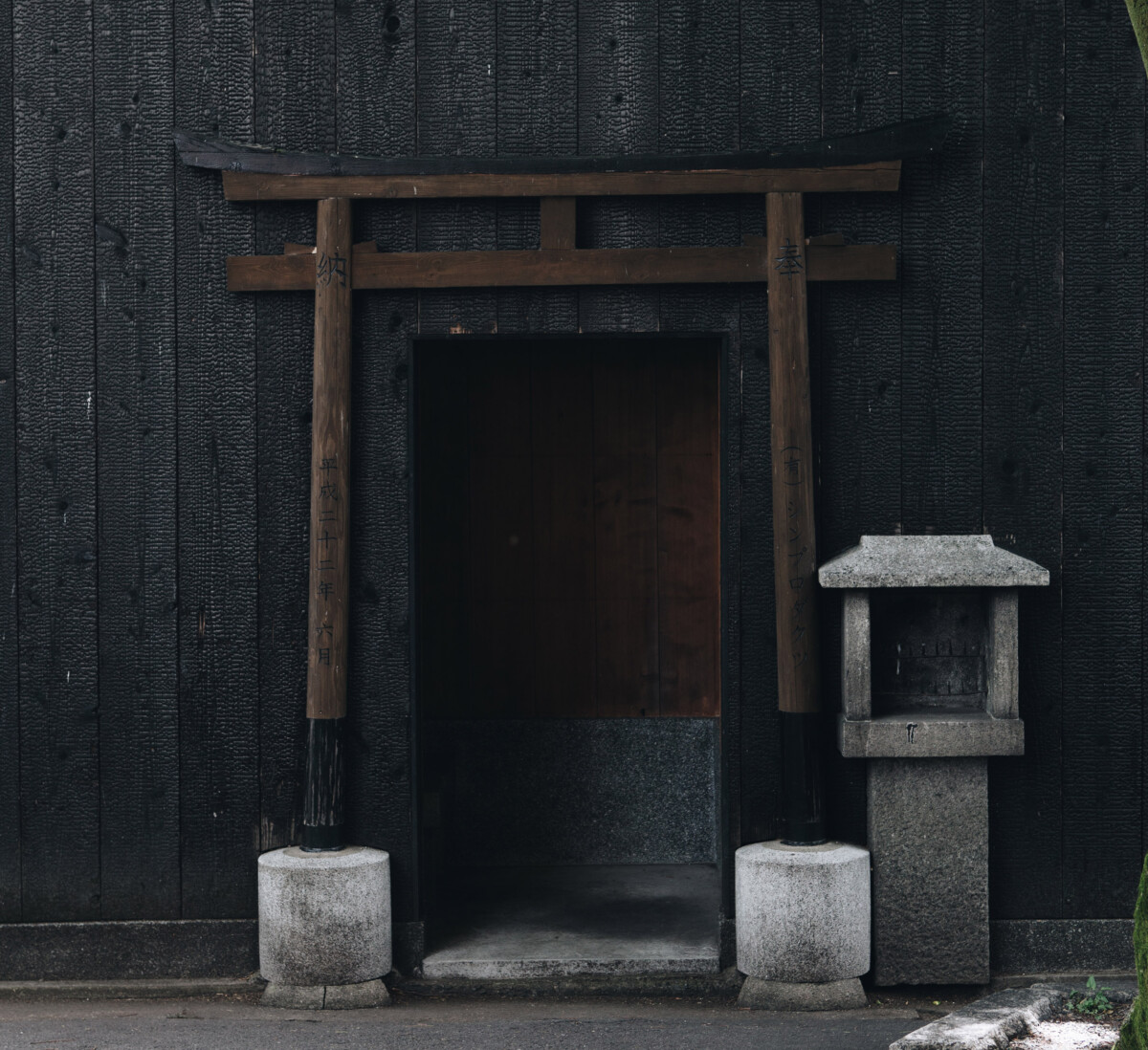
Both timbers take oil finishes well. Where Japanese Cedar has the edge is range. It is the traditional timber for yakisugi, the Japanese charred-timber finish, which Sugi makes to order, and it can be supplied pre-coated with the Dryden two-coat oil system so only cut ends need touching on site.
Supply and sustainability
This is where the two part company. Western Red Cedar supply is constrained by harvest quotas, wildfire seasons and tariffs, and New Zealand is a long way down the queue. Japanese Cedar comes from renewable plantation forests with a structural surplus, through a GOHO-certified mill network that verifies the legal origin of every shipment. Sugi imports direct and holds weatherboard profiles in stock in Tauranga, with around eight weeks for custom profiling and finishes.
The short version
Imported Japanese Cedar sits in the same Scion durability class as imported Western Red Cedar, moves a fraction of a millimetre more over a season, is easier to work, takes a wider range of finishes, and is available. For most New Zealand cladding projects that were going to be cedar, it is the straightforward substitution.
Order samples · Download the specification documents, including the Scion report and BEAL appraisal · Get a quote